Launching a New Competition!
Join our New Insurance Video Competition! First Submissions Receive a Prize!
A tragedy in Novi Sad ignited one of Serbia’s largest youth-driven movements. Our Alumni Talk brought together three Serbian voices to explore what these protests reveal about democracy, accountability, and the power of young people.

Unsplash/Tiago Gerken
On the 1st of November 2024, part of a renovated train station in Novi Sad, Serbia, collapsed, killing 16 people. Protests broke out in the aftermath of this tragedy, primarily led by students, criticising the government of corruption. The students claim that the companies who renovated the station, and companies who receive other government contracts, were not appointed in a transparent way and did not have sufficient quality checks in their work, thereby causing a part of the train station’s collapse.
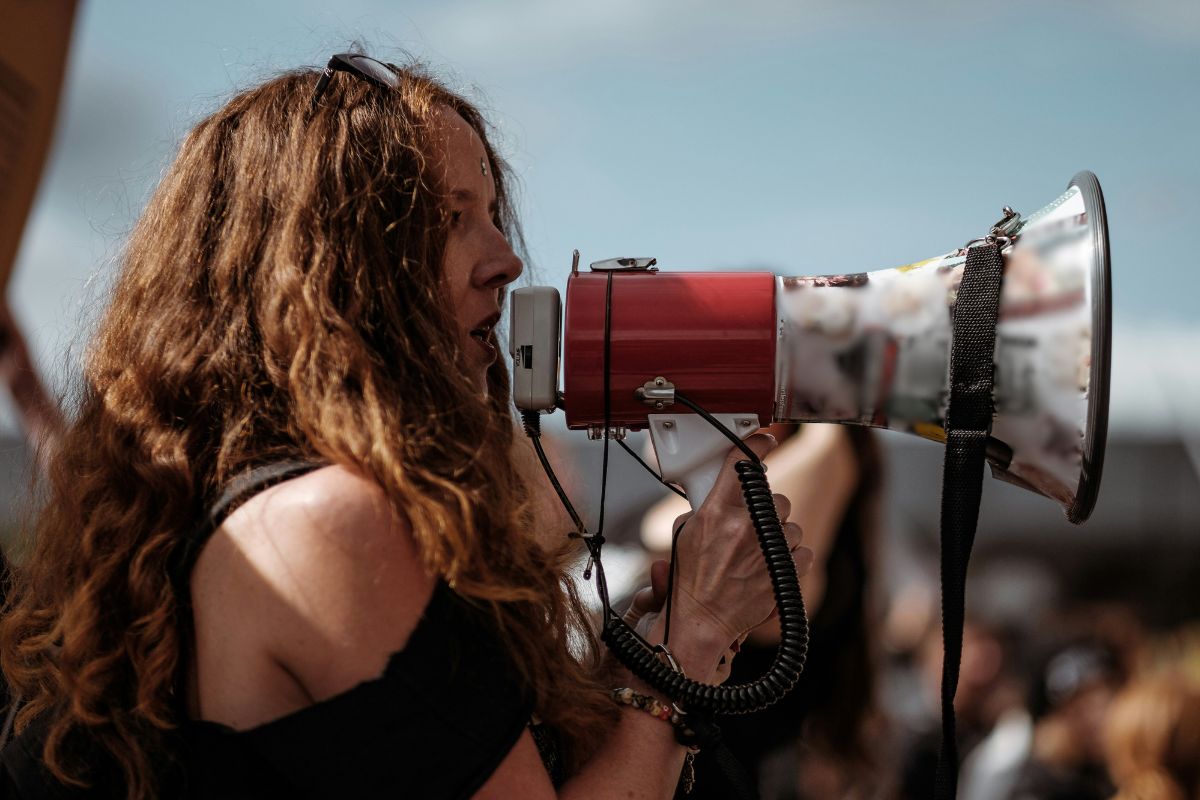
These demonstrations grew into a larger movement against the Balkan country’s leadership which the protesters accused of lacking transparency and authoritarian tendencies. The government has responded by threatening mass arrests and refusing to cede power. Additionally, protesters have repeatedly accused the police of brutality and crackdowns against the demonstrators
The movement grew with many actors, farmers, lawyers, and other people joining in. For over a year, they have organised hundreds upon hundreds of activities across the whole country, bridging urban, suburban, and rural Serbia in a shared mourning and calls for political and legal responsibility. Among many of its accomplishments, the movement has reportedly led to the largest protest in Serbian history in March 2025.
In a period of political instability across Europe, what can young people learn from the events that have transpired during Serbia’s months-long student movement?
Unsplash/ Clem Onojeghuo
On the 8th of October 2025, the European Youth Parliament’s Alumni Talks series was restarted with a digital panel discussion on this topic. The three Serbian panellists, each with a different experience of the movement, came together to discuss the events of the past year, guided by the moderator Ilija Jerković. The goal of the event was to share stories and learnings of the movement in Serbia with young people across Europe.
Luka, a student from Novi Sad who has witnessed much of the protesting and blockading at universities, discussed the sense of solidarity that has been evoked by the events of recent months. “For my whole life I did not see Serbians as being defiant or in solidarity with each other” he said, “but these past 11 months have shown us the true side of Serbian citizens, and the one I am most proud of”.
For Maša, who works at the National Youth Council of Serbia, the movement has also challenged a common view of Serbian youth. She highlighted that the National Youth Council has had “a constant struggle to prove that youth are not a passive contributor to society” – a view she feels was widespread in the Balkan nation. “Now it’s been proven right that they care about their future, they just lack trust in institutions.”
Srđan, an attorney at law who has represented some young people who have been injured by the police, believes that this movement is not just about students or young people. “These protests have engaged a wide range of different societal groups” he shared, noting of course the central role of students and educators but also “people working in agriculture, lawyers”. He also felt it important to note that “no one is striving for violence, and the student movement has not been asking for that”. Srđan sees this as a moment of change in Serbia no matter what comes next because “people are starting to realise that we have to change something”.
Although the panellists each had different experiences of the ongoing protests, they all shared a similar hope for the future of Serbia as a rule-of-law abiding democracy. “The goal is to have fair elections”, Srđan shared, with Luka also noting that the students have “developed a set programme which defines what student-supported candidates must do” in upcoming elections. When asked how young people in Europe could get involved in Serbia’s democratic path, the panellists urged them to contact their MEPs and governments, and as Maša framed it, “ask them to pay attention to what is happening in Serbia right now.”
This discussion event took place as part of the Alumni United project, supported by the E.ON Foundation.