New Toolkits on Urban Climate Resilience
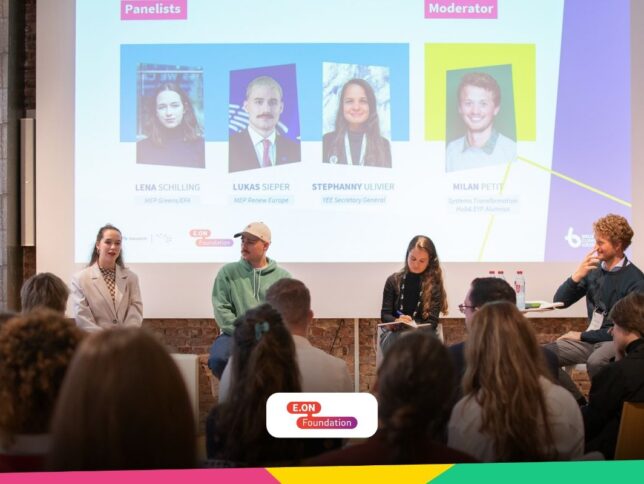
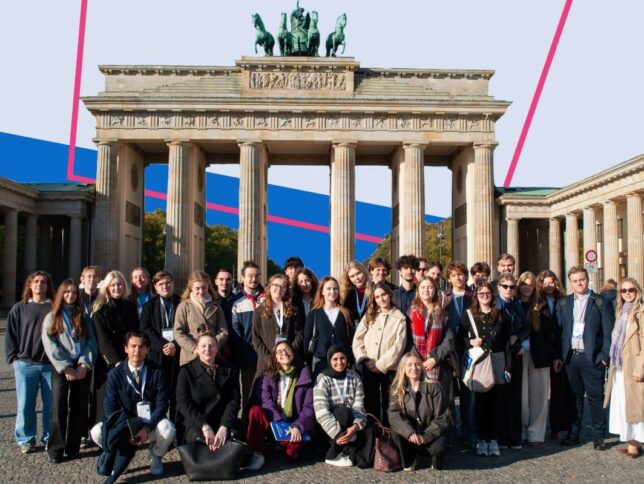
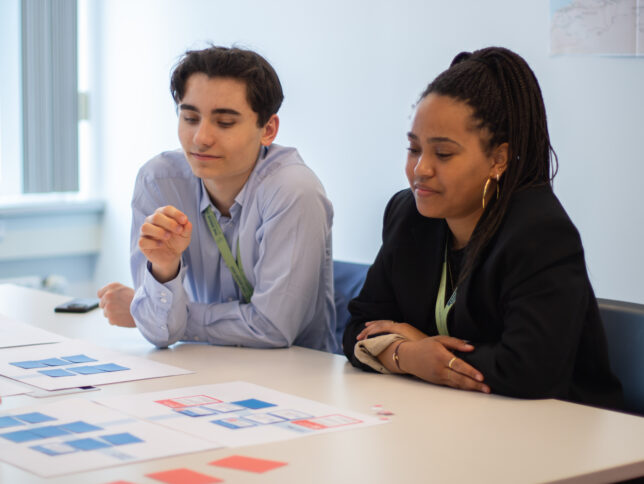
As part of the Youth for Resilient Cities and Urban Environments (Y-RESCUE) project, we are happy to share four educational toolkits focusing on urban climate resilience and youth action.
On October 20, the European Commission released its new Arctic strategy, Europe’s Northern Neighbourhood: A New Strategy for the Arctic. Through the Arctic Youth Dialogue (AYD), Arctic and European youth engaged EU institutions to make policy recommendations in 2024, 2025 and 2026. While we welcome the recognition of several youth priorities, we ask whether the strategy truly turns commitments into action.
We particularly welcome continued youth engagement through the AYD, a Youth Sounding Board in Nuuk and increased youth exchange opportunities (Erasmus+). We also see the recognition of climate change as a defining threat, the importance of climate adaptation, the focus on renewable energy, ocean protection and sustainable local entrepreneurship, and the need to uphold Indigenous Knowledge systems and Indigenous Peoples’ rights including Free, Prior and Informed Consent (FPIC).
However, recognition alone is not implementation. The EU’s emphasis on critical minerals, infrastructure and strategic connectivity raises hard questions of cumulative impacts on biodiversity, Sámi livelihoods and Indigenous Peoples’ rights. In particular, designating contested projects such as Nussir and Sakatti as strategic priorities deserves particular scrutiny. Climate change is reshaping Arctic coasts, permafrost, ecosystems and daily life for Indigenous communities. Food security, housing, health, education and cultural continuity are central to Arctic security – not secondary to external geopolitical interests and contests. These challenges are all interconnected, yet the strategy does not adequately define how Arctic communities will shape priorities, funding and implementation of EU responses. Climate resilience must be defined not only by environmental targets, but by communities’ abilities to sustain their livelihoods, cultures and ways of knowing, living and being.
The Arctic is not a strategic frontier for others to develop. It is a home to peoples and communities whose voices, rights, and futures must evidently shape every decision.
This message is supported by the signatories below from AYD cohorts across 2024, 2025 and 2026: Lauren Clavella, Maëlle Fauvet, Yuliia Fefelova, Ronja Gérard, Niels Grandia, Inès Hamila, Elna Kanerva, Emilia Luiro, Rufus Rune, Sebastian Seebacher, Deniz Vural, Juhán Nikolaus Wuolab Wollberg
–
This publication is part of the EU-funded Youth Together for Arctic Futures project. The project is led by the WWF Global Arctic Programme, in cooperation with the Arctic Youth Network, European Youth Parliament, Saami Council, Arctic Mayors’ Forum, Tromsø Kommune, University of Tromsø, and the Association of Polar Early Career Scientists. This publication was funded by the European Union. Its contents are the sole responsibility of the European Youth Parliament and partners and do not necessarily reflect the views of the European Union.